
UK grants £4,000 credits to carmakers for installing vehicle-to-grid tech
A new consultation proposes financial incentives for installing bidirectional charging, a move critics say could allow automakers to sell more petrol cars while delaying strict emission targets.
By Carmen Valdez ·
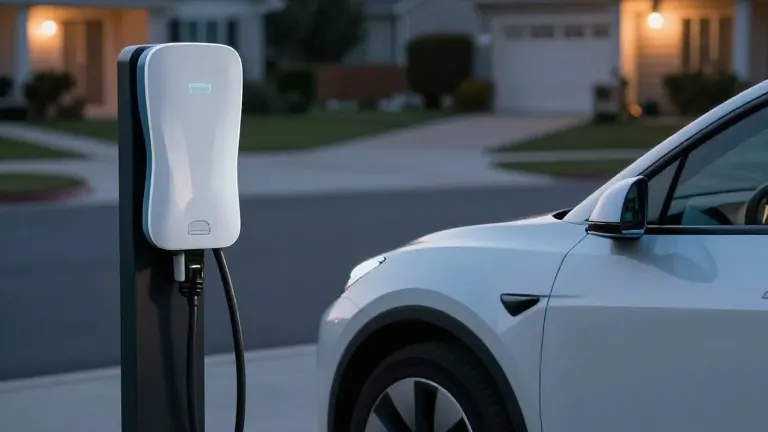
Electric vehicle owners in the United Kingdom may soon receive a financial incentive if their cars can send power back to the national grid. The government is reviewing its zero-emission vehicle mandate and has proposed giving manufacturers credits for installing vehicle to grid technology. This mechanism would allow automakers to sell additional petrol models without facing penalties for missing strict electric vehicle sales targets.
The proposal emerged from a government consultation that closed on Friday, October 23. The initiative is part of a broader review of the rules governing the transition away from fossil fuels. Ministers aim to address the challenge of balancing electricity supply with demand as renewable energy sources expand. By encouraging the adoption of bidirectional charging, the government hopes to reduce reliance on gas power plants during periods of low wind or solar generation.
Vehicle to grid technology allows drivers to charge their vehicles when electricity prices are low, typically overnight. The system then enables the car to export stored energy back to the grid during peak demand hours. This capability could also allow owners to power their homes directly. The National Energy System Operator forecasts that widespread adoption could provide 1.2 gigawatts of power by 2030. That figure is expected to grow to 41 gigawatts by 2050, which would satisfy more than a quarter of peak energy demand in Great Britain.
Critics argue the financial structure of the proposal rewards installation rather than actual usage. Ben Nelmes, chief executive of the thinktank New AutoMotive, stated that carmakers should only be rewarded if the technology is actively used. He noted that the proposed credits are worth approximately £4,000 each. In contrast, the hardware cost is only a few hundred pounds. Nelmes warned that few drivers currently own the expensive chargers required to utilize the full potential of the system.
"Under these proposals, one or even two extra credits worth around £4,000 each would hand manufacturers thousands per car for kit that costs a few hundred pounds, even though few drivers own the expensive charger needed to use it," Nelmes said. He urged ministers to ensure that the benefits of the technology accrue to drivers and billpayers rather than carmaker shareholders.
The Electric Vehicle Association England also expressed concern over the timing of the incentives. Vicky Edmonds, the group's chief executive, pointed out that while millions of drivers own electric vehicles, only a small fraction currently use grid storage technologies. She argued that consumers are still focused on immediate issues such as vehicle purchase costs and daily charging needs. "It is far too early to be giving manufacturers a credit that effectively allows them to sell fewer EVs, for a technology that has not even been tried and tested, at scale, by drivers in the real world," Edmonds said.
Environmental groups anticipate that the new rules will lead to a reduction in electric vehicle sales targets. They estimate that these changes could result in an additional 147 million tonnes of carbon emissions by 2050. The government has indicated it is preparing to lower the current mandates. This shift aims to provide flexibility for manufacturers while they adapt to the new credit system.
Some drivers already participate in similar schemes through providers like Octopus Energy in the UK, Renault in France, and BMW in Germany. Octopus Energy has claimed that drivers can save £620 per year by utilizing these services. The government's new proposal seeks to expand this model by integrating it directly into the regulatory framework for vehicle sales. The consultation period has ended, and the government is now evaluating the responses before finalizing the mandate changes.
Source: The Guardian